
How Can Retailers Ensure the Eggs They Sell Are Ethically Sourced?
This post contains affiliate links. Click here to read my affiliate policy.
Last Updated on December 24, 2025
| Key Takeaways |
| Ethical egg sourcing requires a close look at certifications, hen husbandry and supplier transparency. Certified Humane, USDA Organic and B Corp certifications offer third-party validation for welfare or business practice. Retailers benefit from choosing suppliers that partner with independent family farms and provide traceability tools. You can build trust with shoppers when your selection reflects humane care, responsible land use and transparent sourcing. |
Eggs sourced ethically are a priority for many shoppers, especially those who care about animal welfare and responsible food systems. When customers shop for healthy food, such as eggs, they want reassurance that the choices they make align with the values they can support. Retailers build that trust by checking the responsible sourcing of their products.
Selecting the right suppliers means understanding certification labels, learning how hens are raised and choosing partners who value long-term relationships with family farms. With knowledge, retailers can offer eggs that are produced with integrity, quality and responsible stewardship.
Best Practice for Selecting Ethical Egg Brands
This roundup uses specific criteria to highlight trusted egg brands:
- Animal welfare standards: Preference is given to suppliers with Certified Humane, USDA Organic or American Humane Certifications that maintain quality standards of living for farm animals based on scientific evidence.
- Family farm partnerships: Companies that partner with independent, multi-generational farms lead the way.
- Transparency practices: Brands with traceability tools, published animal care standards or open communication are more popular.
- Product quality and variety: Retailers benefit from suppliers offering high-quality brown and white eggs across various options, including free-range, organic and pasture-raised.
The 3 Top Ethically Sourced Egg Brands
Suppliers with animal-friendly hen husbandry practices, responsible partnerships and transparent communication offer reliable supply chains that alleviate consumer concerns.
1. Sauder’s Eggs

Sauder’s Eggs sits comfortably at the top of the list thanks to its long-standing commitment to family farming, hen husbandry and transparency. Founded in the 1930s and still family-owned today, the brand proudly builds quality relationships with generational farms and delivers high-quality eggs to your shelves. This unique relationship model preserves deep agricultural traditions rooted in integrity and care.
Suppliers, retailers and consumers benefit from the brand’s commitment to humane practices. Select products carry the Certified Humane label, demonstrating adherence to robust welfare standards. The brand’s focus on brown eggs aligns with its outdoor-forward rebrand and reflects a desire to offer quality that honors hens and land stewardship.
Sauder’s Eggs’ transparency sets it apart. The farm code lookup printed on cartons enables retailers and shoppers to trace their purchases back to the partner farm. This feature strengthens consumer trust and reinforces the brand’s “from one family to another to yours” philosophy.
Key Features:
- Multi-generational, family-owned company
- Close partnerships with independent family farms
- Commitment to responsible hen husbandry
- Farm code lookup for transparency
- Certified free-range and pasture-raised brown eggs
2. Vital Farms
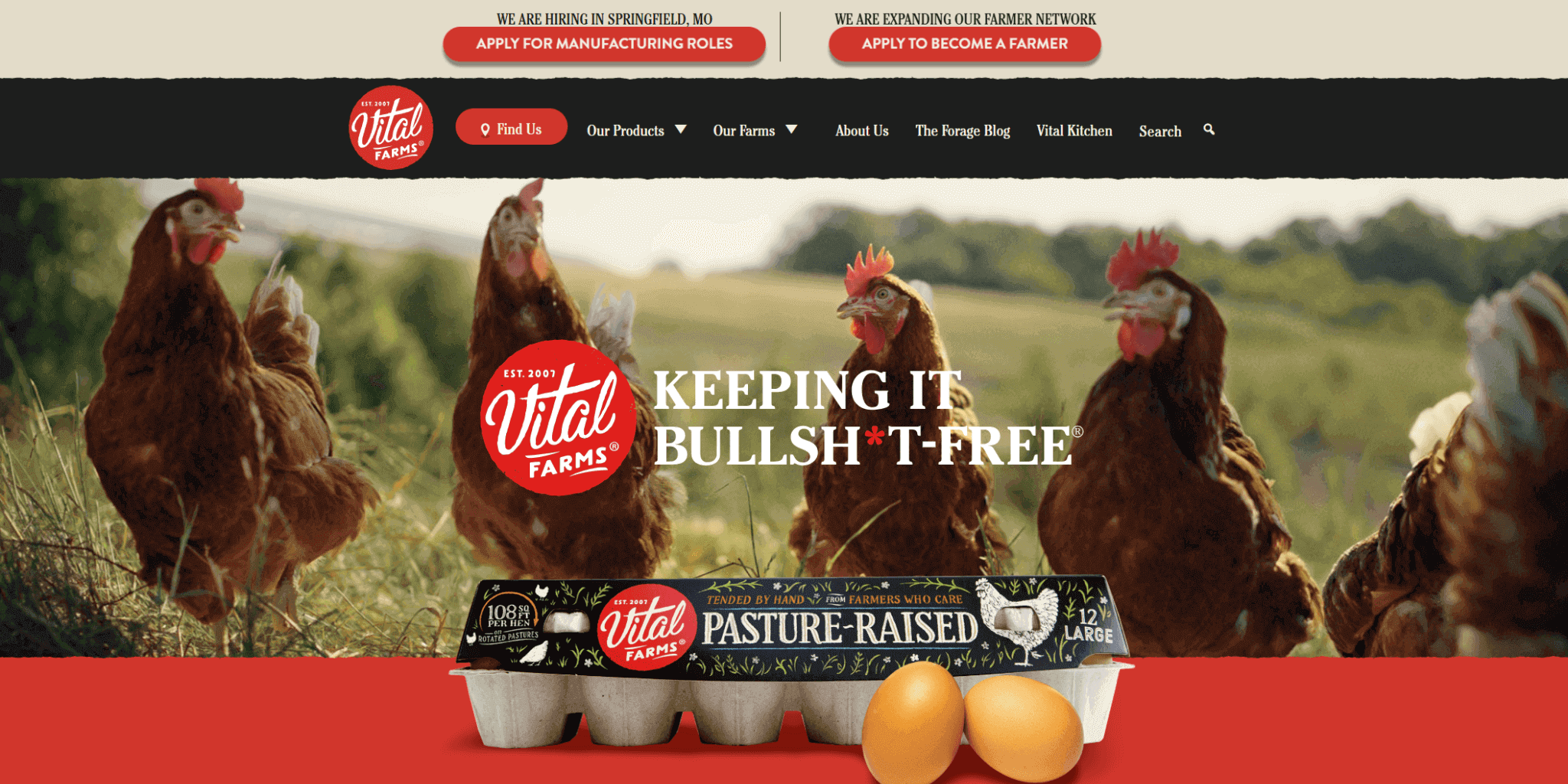
Vital Farms is widely recognized for its pasture-raised standards, which guarantee hens at least 108 square feet of space to roam in an outdoor environment. As a Certified Humane company, it demonstrates accountability in environmental and social areas. Vital Farms partners with family farms that offer their animals a high-quality lifestyle, and with the brand’s unique stakeholder model, farmers receive ongoing support to provide organic and humane eggs.
The brand also offers strong transparency through its “trace your eggs” feature, allowing consumers to view a 360-degree view of the farm where those specific eggs were laid. Vital Farms has a strong impact on the Austin, Pasture Belt and Springfield communities, where initiatives continue the goodness of the brand’s success to those at the grassroots level.
The company’s impressive impact strategy focuses on building resilient food systems through responsible sourcing and buying, which extends to retailers who partner with it. Its dedication to sustainability has earned it multiple awards and certifications.
Key Features:
- Certified Humane eggs
- Minimum space requirement for all egg-laying hens
- Farm video tracing tool
- Regenerative land practices
- Community-focused business model
3. Pete & Gerry’s
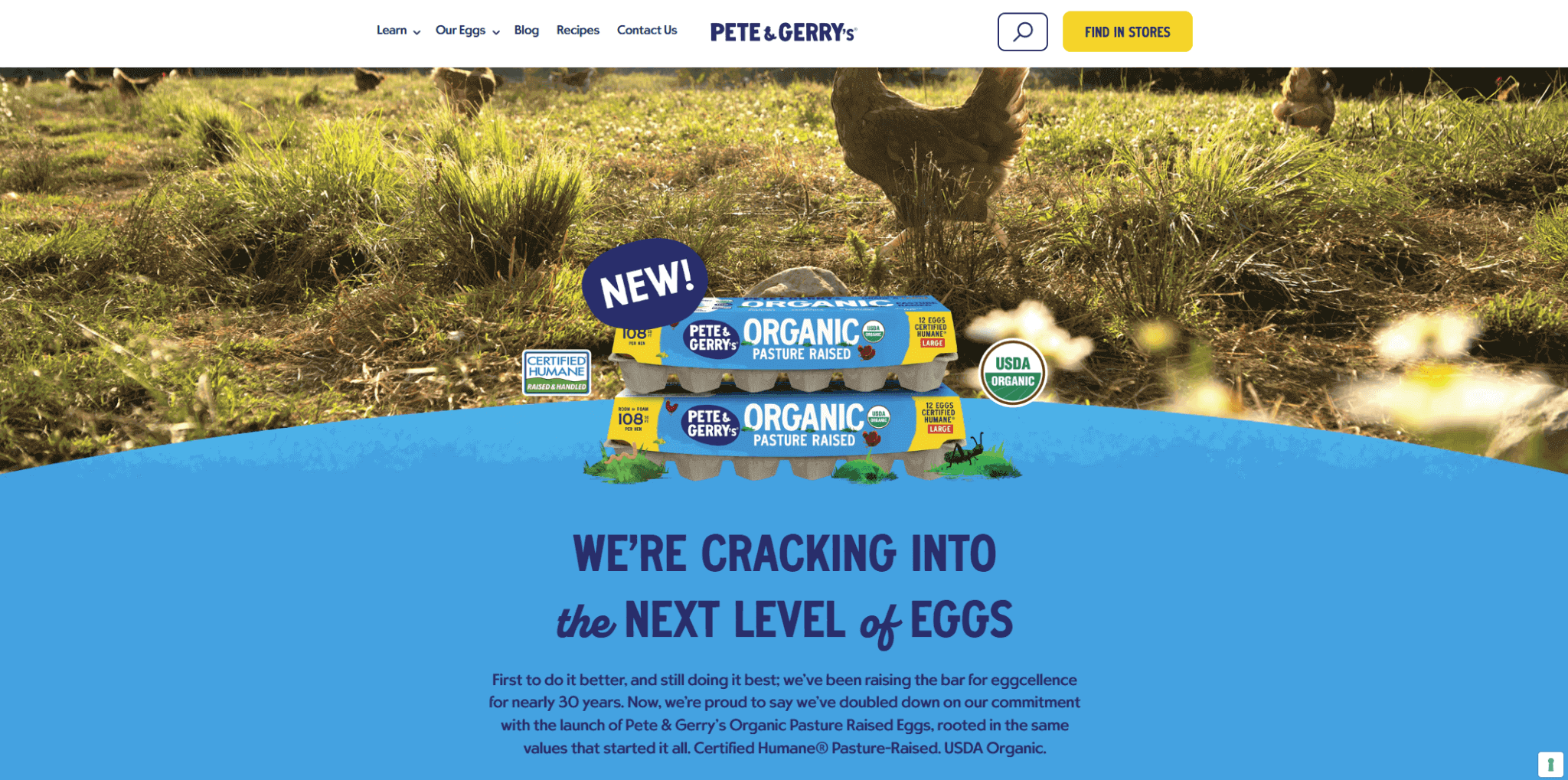
Pete & Gerry’s has long been a leader in organic and responsible egg production. As the first B Corp egg producer in the U.S., the company demonstrates a clear commitment to responsible business practices. Each egg comes from one of over 200 independent family farms that all adhere to USDA Organic and Certified Humane standards. Many farmers have been with the company for over a decade, indicating the resilient and productive relationship that it fosters.
The egg supplier offers an open invitation to small-scale farmers to join the production family, provided they meet the requirement of at least 50 acres and adhere to humane animal welfare standards. The brand also sells egg-related products such as organic liquid egg whites for baking purposes.
As part of its community commitment, Pete & Gerry’s partners with No Kid Hungry, helping to provide meals to children in food-insecure families.
Key Features:
- USDA Organic and Certified Humane eggs
- Certified B Corp
- Network of over 200 family farms
- Recycled plastic cartons with a lower carbon footprint
- Socially responsible supplier
How Can Retailers Ensure the Eggs They Sell Are Ethically Sourced?
The top three ethically sourced egg suppliers have unique business practices and discerning features that help you decide what to stock on your shelves.
| Brand | Key Certifications | Sourcing Model | Notable Feature |
| Sauder’s Eggs | Certified Humane on select products | Extension of family farms | Farm code lookup for transparency |
| Vital Farms | Certified Humane, B Corp | Network of small family farms | 108 sq. ft. outdoor space standard |
| Pete and Gerry’s Organic Eggs | USDA Organic, Certified Humane, B Corp | 200+ independent farms | 100% recycled cartons |
How to Vet Your Egg Supplier
Ethical sourcing begins with understanding how hens are raised and live, how farms operate and the level of transparency a supplier provides. Today’s shoppers care deeply about animal welfare and responsible agriculture, so retailers who prioritize these values gain loyalty and reputational strength.
When considering a new supplier, you should take the following steps.
Investigate Third-Party Certifications
Certifications help verify animal welfare and environmental claims. For animal care, certified audits that evaluate space, enrichment and handling matter. USDA Organic-certified eggs require farmers to produce organic food through responsible practices. When certifying an egg producer, inspectors check that hens were raised on organic feed and had outdoor access, as well as that workers lived and worked in humane conditions.
Investigate Hen Husbandry Practices
Industry terminology — such as cage-free, free-range and pasture-raised —differs in its impact on hens in terms of outdoor time, indoor space and access to natural behaviors. Although housing types do not change nutritional value, they do reflect how hens are cared for. As a retailer, you must prioritize suppliers that feature humane hen husbandry that aligns with what many shoppers want to see on shelves.
Prioritize Supply Chain Transparency
Suppliers committed to ethical sourcing often provide tools, such as farm locators or carton codes, that trace eggs back to the partner farm, ensuring you always know the origin of what you sell. This level of transparency reassures retailers and consumers who want to know the origin of their purchases.
Evaluate the Farm Partnership Model
Brands that extend family farms uplift smaller agricultural communities and keep generational acreage thriving. This model often reflects deeper commitments to integrity, long-standing relationships and consistent quality.
Frequently Asked Questions
What Is the Most Important Certification for Ethical Eggs?
Certified Humane is one of the most widely trusted indicators of animal welfare because it evaluates space, enrichment, handling and on-farm practices. Many retailers seek this label as a baseline for their sourcing standards.
Does Eggshell Color Indicate Quality or Ethical Sourcing?
No, shell color depends entirely on the breed of the hen. Responsible sourcing refers to the manner in which hens are raised and whether suppliers prioritize humane husbandry and transparent practices.
Can Retailers Visit the Farms Where Their Eggs Come From?
Some suppliers offer farm visits, while others provide digital traceability tools. Companies like Sauder’s and Vital Farms offer farm code lookup or on-pack tracing, which helps retailers verify sourcing even without a physical visit.
Sustainable Egg Production for a Safer Future
An empowered retailer knows where the eggs on their shelves come from, how they are produced and what conditions the hens live in. Leveraging reliable networks, quality certifications and tracking codes can verify ethical sourcing and high quality. With this knowledge, retailers can assure consumers that their egg purchases are safe.