
How Custom Silicone Molds Help Brands Create Signature Products
This post contains affiliate links. Click here to read my affiliate policy.
Last Updated on May 7, 2026
In a market full of look-alike products, a brand’s ability to offer something visually distinct and physically unique can make all the difference. Custom silicone molds give businesses that exact advantage. Whether a company sells artisan chocolates, specialty candles, cosmetic products, or industrial components, the shape of the product itself becomes part of the brand identity.
This article explores why custom silicone molds matter to modern brands, how they deliver a competitive edge, and what the mold development process actually looks like from concept to finished product.
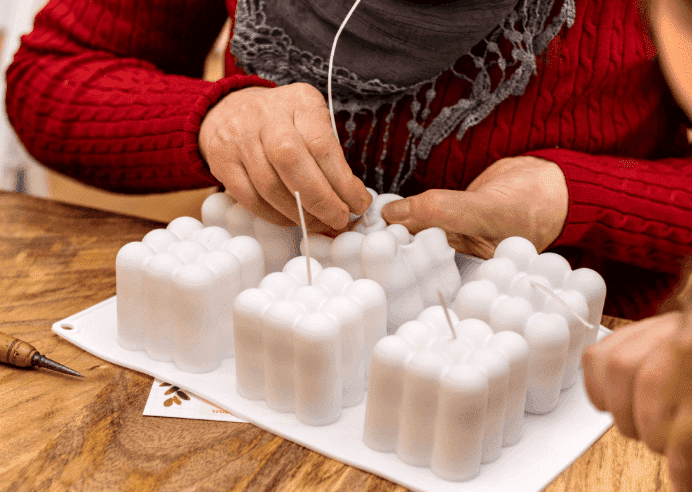
Why Custom Silicone Molds Give Brands a Competitive Edge
Every product that sits on a retail shelf or arrives in a customer’s hands tells a story. Its shape, texture, and finish communicate quality before anyone reads a single word of copy. Custom silicone molds let brands take direct control of that story by producing products with shapes, details, and surface finishes that are impossible to achieve through off-the-shelf mold options.
Exclusive Product Design as a Brand Differentiator
A brand that invests in custom mold design owns something competitors cannot easily replicate. Unlike generic catalog molds that any business can purchase and use, a custom silicone mold is built to specification for a single client. The result is a product shape that belongs exclusively to that brand. Consider artisan soap makers, gourmet chocolate companies, or luxury skincare brands. Their product shapes are often as recognizable as their logos. That level of recognition does not happen by accident. It comes from deliberate design decisions executed through precision mold manufacturing.
For food and confectionery brands specifically, custom molds from food-grade silicone allow them to translate a logo, mascot, or seasonal design directly into an edible or consumable format. This creates a brand touchpoint that customers can literally experience with their hands, building stronger emotional connections than packaging alone ever could.
Consistency Across High-Volume Production
One of the most practical advantages custom silicone molds offer is production consistency. A well-designed custom mold produces the same result across hundreds or thousands of units. Each piece comes out with identical dimensions, surface texture, and structural integrity. For brands that depend on uniformity to meet retail standards or customer expectations, this level of repeatability is not optional. It is the baseline requirement.
Silicone as a material also handles temperature variation and release cycles better than many alternatives. It does not require chemical release agents in most applications, which reduces contamination risk and simplifies production workflows. For brands in food, cosmetics, and pharmaceutical spaces, that matters significantly.
Flexibility Across Product Categories and Materials
Custom silicone molds are not limited to a single industry or material type. A brand can use the same mold manufacturing approach whether the end product is chocolate, resin, wax, concrete, soap, or epoxy. This flexibility allows a business to extend its product line using a consistent design language. A candle brand might produce a signature floral mold shape, then offer that same shape across multiple scent variations and seasonal collections.
Beyond design flexibility, silicone molds also accommodate complex geometries that rigid molds cannot. Undercuts, fine surface detail, and three-dimensional forms that would lock inside a hard mold release cleanly from silicone. For brands that prioritize intricate, premium design, this material property opens significant creative possibilities.
How the Custom Mold Process Translates a Brand Vision Into a Physical Product
Understanding the custom silicone mold process helps brands approach it more strategically. Many businesses treat mold development as a purely technical task, but it is in fact a design and communication exercise as much as an engineering one. The brands that get the best results treat the mold maker as a creative collaborator rather than just a manufacturer.
The Design and Prototyping Phase
The process typically begins with a concept. A brand might provide a sketch, a 3D digital file, a physical prototype, or a detailed description of the desired shape. From there, a mold maker converts the idea into a workable design. For complex shapes, this stage often involves CAD modeling, which lets the brand review and approve the geometry before any physical mold is produced.
Prototyping follows. In many cases, a test mold or a small-batch sample allows the brand to evaluate how the design performs in practice. Does the product release cleanly? Do the fine details hold up under production conditions? Does the shape photograph well for marketing? These questions get answered during the prototype phase, long before the brand commits to full production tooling. This stage saves significant time and money by catching design issues early.
Material Selection and Mold Durability
Not all silicone molds are created equal. The silicone formulation, shore hardness, and construction method all affect how the mold performs over time and what materials it can safely process. A mold used in a high-temperature environment, such as baking or chocolate tempering, requires a different specification than one used for cold-process soap or resin casting.
Brands should work closely with their mold supplier to select the right formulation for their production environment. Mold durability directly affects the cost per unit over the life of the tool. A high-quality custom silicone mold built to the correct specification can last for thousands of production cycles, which spreads the upfront development cost across a large volume of product. For brands with steady demand, this makes the investment financially straightforward.
Scaling From Small Batch to Full Production
Custom silicone molds scale in a way that suits brands at different stages of growth. A small business might start with a single handcrafted mold for limited runs, then transition to professionally manufactured multi-cavity molds as order volumes increase. Multi-cavity molds allow a brand to produce more units per cycle without proportionally increasing labor or equipment costs.
This scalability also gives brands the freedom to test new product shapes without a large upfront commitment. A brand can launch a new design in a limited edition format using a small mold, gauge customer response, and then invest in a higher-capacity mold if demand justifies it. This approach reduces product launch risk considerably while still allowing the brand to bring distinctive, signature shapes to market quickly.
Conclusion
Custom silicone molds give brands a practical and creative tool to build products that are distinctly their own. From the first design sketch to full-scale production, the mold development process allows a brand to embed its identity directly into the product itself. For businesses that want their products to be instantly recognizable and consistently produced, investing in custom silicone molds is a strategic decision with measurable long-term returns.