
Full House Remodel on a Budget: Where to Splurge, Where to Save
This post contains affiliate links. Click here to read my affiliate policy.
Last Updated on September 29, 2026
A full house remodel touches almost everything — layout, systems, finishes, storage, curb appeal — which makes it one of the easiest projects to either overspend on or under-invest in the wrong places. The homeowners who end up happiest with the result usually aren’t the ones who spent the most money. They’re the ones who spent it in the right order.
That order matters more than most people expect going in. Working with a team Seattle homeowners trust for full house remodeling can help map out a realistic budget early, before decisions about finishes start competing with decisions about the bones of the house. Here’s how to think through where your money actually does the most good.
Start With What You Can’t Easily Change Later
Before any conversation about cabinets, tile, or paint colors, the budget needs to account for the things that are extremely difficult and expensive to redo once walls are closed up.
Structural and Systems Work
Electrical capacity, plumbing lines, HVAC, and structural framing should always take priority over cosmetic choices. If your panel needs upgrading, if pipes are aging out, or if a wall needs to come down to fix a layout that hasn’t worked in decades, that work needs to happen first — and it needs to be done right. Skimping here to save money for finishes almost always costs more later, either in repairs or in the disruption of reopening finished walls.
Windows and the Building Envelope
Windows, insulation, and exterior sealing affect comfort and energy costs for as long as you own the house. In Seattle’s climate, poorly performing windows or gaps in the building envelope show up quickly as drafts, condensation, and higher heating bills. Upgrading these during a full remodel — while walls and exteriors are already open — is far more cost-effective than tackling them as a standalone project later.
Permits and Inspections
Structural, electrical, plumbing, and mechanical work almost always requires permits, and a full remodel usually means several of them. Permit fees, plan review, and inspection visits are real line items, and waiting on approvals can add weeks to a schedule. Build both the cost and the time into the plan from day one, rather than treating permits as paperwork to sort out later. Skipping them to save money can cause problems when you sell or file an insurance claim.
Where It Pays to Splurge
Once the underlying systems are handled, a few categories consistently deliver the most value for the money, both in daily livability and in how the home is perceived by future buyers.
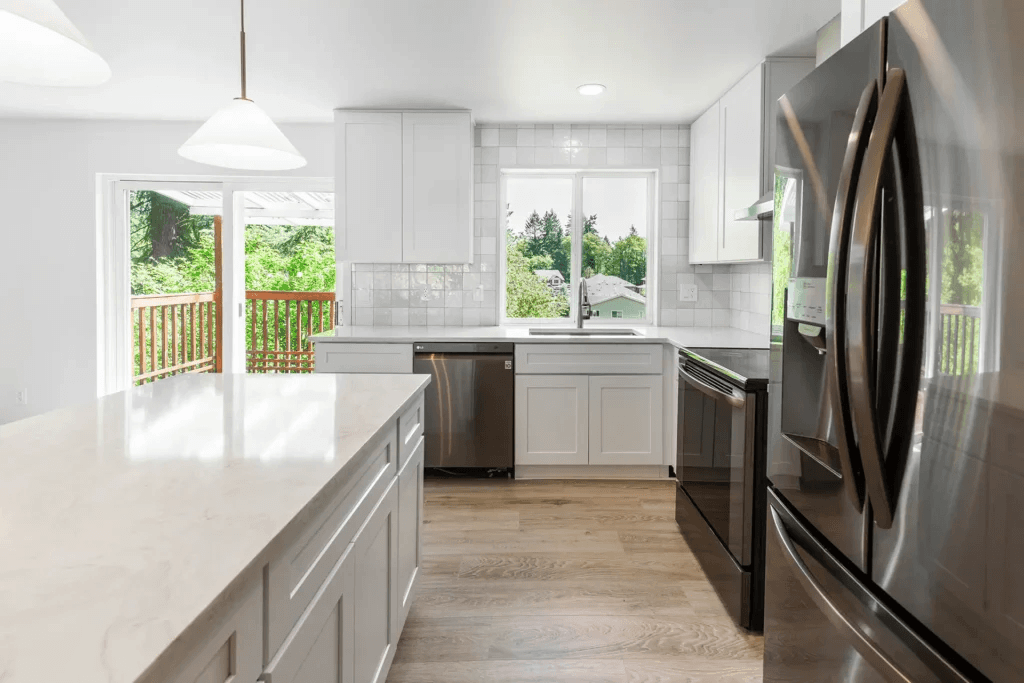
- The kitchen. It’s the room used most and the one buyers scrutinize hardest. Investing in durable countertops, well-built cabinetry, and quality appliances pays off both in daily use and resale value. This doesn’t mean everything needs to be top-shelf — it means the core elements should be built to last, since a kitchen redo a few years later is far more disruptive than getting it right the first time.
- The primary bathroom. Waterproofing, quality tile work, and a well-thought-out layout matter more here than almost anywhere else in the house, since bathroom failures are expensive and messy to fix. This is not the place to choose the cheapest option on a bid.
- Flooring in main living areas. Floors take the most daily wear of almost any finish in the house. Higher-quality flooring in kitchens, living rooms, and hallways tends to look better for longer and holds up to real family life in a way cheaper materials often don’t.
Where You Can Save Without Regret
Not every square foot of the house needs the same level of investment, and knowing where to pull back is just as important as knowing where to spend.
- Secondary bathrooms and guest spaces. A guest bath or powder room doesn’t need the same premium finishes as the primary bath. Stock vanities, mid-range tile, and simpler fixtures still look clean and polished without the added cost.
- Closets and storage. Custom built-in closet systems look great, but simple, well-organized shelving does the job for a fraction of the price — and can often be upgraded later without touching the rest of the room.
- Light fixtures and hardware. These are some of the easiest and least expensive elements to swap out down the road. Choosing solid mid-range options now, rather than premium designer fixtures, frees up budget for the harder-to-change items without sacrificing the overall look.
- Landscaping, at least initially. Outdoor space matters, but it’s also one of the easiest areas to phase in after the interior remodel is complete, once the bulk of the budget has already gone toward the house itself.
The Middle Ground: Semi-Custom Choices
Between fully custom and rock-bottom budget options sits a large middle ground that often gets overlooked. Semi-custom cabinetry, quality stock materials with a few upgraded details, and mixing higher-end fixtures in high-visibility spots with simpler ones elsewhere can stretch a budget significantly without making the home feel like a series of compromises. A good contractor can usually point out exactly where this kind of substitution makes sense on a given project and where it doesn’t.
Building a Budget That Actually Holds
The most common reason full remodel budgets blow past their original number isn’t bad planning — it’s decisions made room by room without a clear sense of the whole project’s priorities. Before finishes are chosen, it helps to rank what matters most: is it the kitchen, the primary suite, energy efficiency, or simply finishing the whole house without surprises? That ranking should drive where the budget flexes and where it holds firm.
It also helps to divide the budget into two buckets before any shopping starts: the must-do work (structure, systems, envelope, and permits) and everything else. Price the must-do bucket first and treat that number as fixed. Whatever remains is your finish budget, and that’s where the splurge-and-save choices above come into play. Doing it in this order keeps a beautiful countertop from quietly eating the money meant for new wiring.
Set Aside a Contingency Fund
Older homes rarely open up without a surprise or two: rot behind a shower wall, outdated wiring, or framing that isn’t up to code. Most contractors recommend holding back 10–20% of the total budget as a contingency, leaning toward the higher end for older houses or projects with major structural work. If the money isn’t needed, it can go toward an upgrade near the end of the project. If it is needed, it keeps an unexpected repair from forcing cuts to the kitchen or the primary bath.
Doing a full house remodel on a budget means being deliberate rather than cutting corners everywhere equally. Invest in what’s hard to change and what gets used every day, while saving on what’s easy to upgrade later without regret.