
How to Meal Prep a Week of Low-Carb Dinners Without Cooking Every Day
This post contains affiliate links. Click here to read my affiliate policy.
Last Updated on November 12, 2026
It’s 6 p.m., everyone is hungry, and there’s a package of raw chicken in the fridge next to a head of broccoli that still needs chopping. After a long day, starting dinner from scratch is the last thing anyone wants.
A little Sunday meal prep can make those evenings much easier, and it’s the simplest way to have low-carb dinners ready for the week. Cook two or three versatile proteins, prepare a few low-carb sides, and you’ll have the building blocks for different dinners throughout the week. There’s no need to make five complete meals in advance. The trick is choosing ingredients that work together and storing them properly so everything stays ready to use.
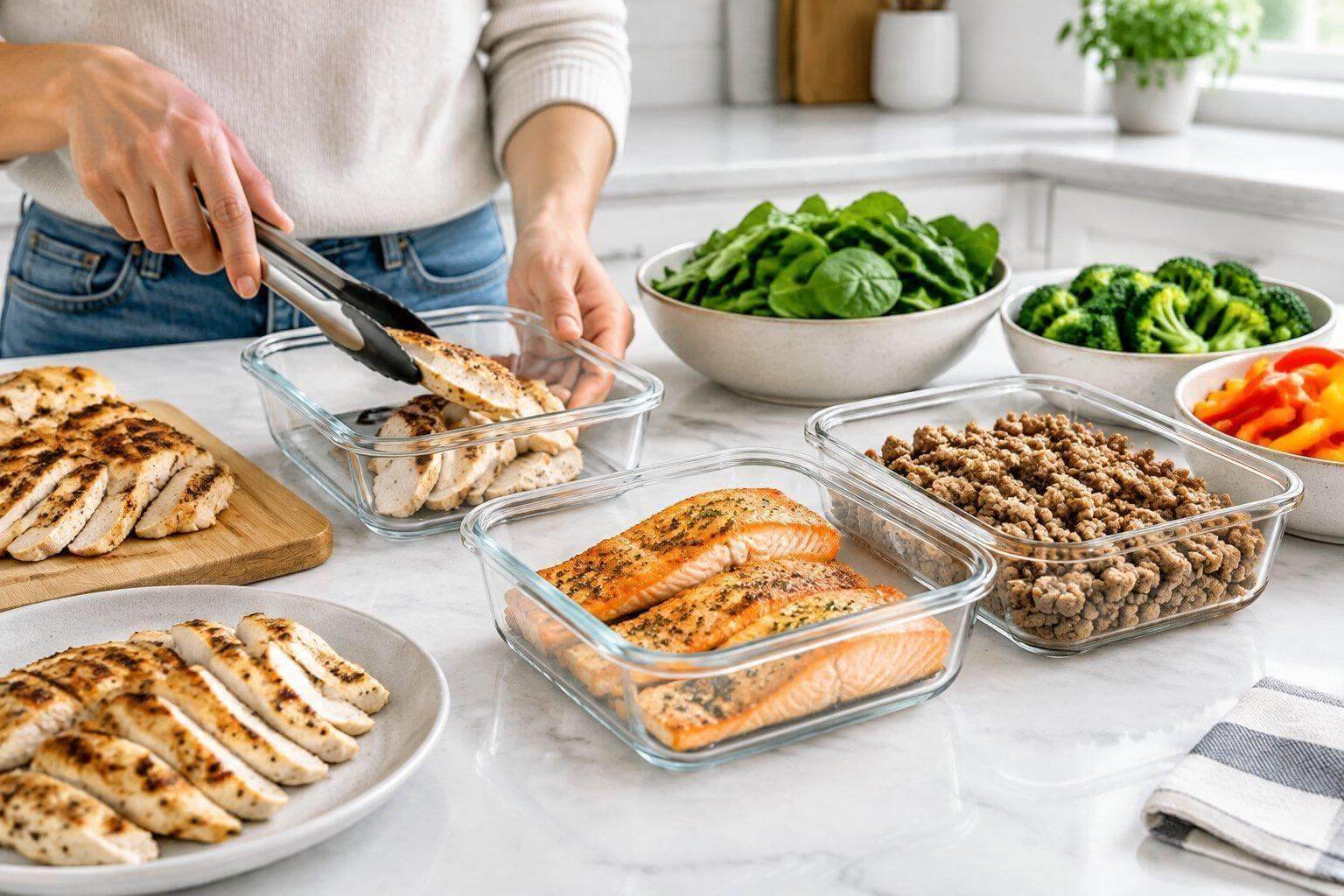
Start With Two or Three Proteins You Can Use All Week
A few simply seasoned proteins give you more flexibility than five separate recipes. Change the sauce, vegetables, or toppings, and yesterday’s chicken can become something entirely different.
Choose Proteins That Work in More Than One Recipe
Chicken thighs roasted with garlic, olive oil, and herbs stay tender when reheated. Ground beef browned with onion and a little garlic works equally well in taco bowls or a savory mushroom skillet.
Baked turkey meatballs are another easy option. If your household enjoys fish, salmon makes a nice addition for an early-week dinner, although it’s best prepared closer to the day you’ll eat it.
Keep Sunday’s seasonings simple. Roasted chicken might become garlic chicken with broccoli on Monday and chicken salad tucked into lettuce cups on Thursday. A little avocado oil mayonnaise and lemon make an easy dairy-free dressing.
Shortcuts are welcome, too. Store-bought rotisserie chicken or canned salmon or tuna can fill the gaps when your cooking plans change.
Prep Low-Carb Vegetables and Sides While Everything Cooks
While the chicken roasts, make use of the oven time. A second sheet pan of broccoli tossed with olive oil can cook alongside it if the temperatures and oven space allow.
Make Simple Sides You Can Mix and Match
Choose vegetables that work with several dinners. Roasted broccoli and cauliflower are easy to reheat, while asparagus and green beans can be trimmed ahead and cooked fresh in minutes. Sliced mushrooms are handy for a quick skillet meal.
Use the remaining prep time to get a few ingredients ready:
- Wash and thoroughly dry lettuce before refrigerating it in a covered container with a paper towel.
- Prepare cauliflower rice for quick skillet bowls.
- Slice bell peppers and onions for taco bowls or salads.
- Portion shredded cheese, salsa, and other toppings into small containers.
Some ingredients are better left until dinner. Keep dressings separate from salad greens, slice avocado just before serving, and save delicate vegetables for a quick cook later in the week.
Turn Your Batch-Cooked Ingredients Into Five Low-Carb Dinners for the Week
The secret to avoiding repetitive meals is changing how you serve the ingredients. A different sauce, fresh topping, or vegetable can make a familiar protein feel new.
A Simple Monday-to-Friday Low-Carb Dinner Plan
| Day | Dinner | Prepared components |
| Monday | Garlic chicken with roasted broccoli | Chicken thighs, broccoli, lemon or garlic butter |
| Tuesday | Beef taco bowls | Ground beef, cauliflower rice, peppers, salsa, avocado |
| Wednesday | Salmon with asparagus | Freshly cooked salmon, pre-trimmed asparagus |
| Thursday | Chicken salad lettuce wraps | Thawed chicken, lettuce, celery, mayonnaise |
| Friday | Beef with mushrooms and green beans | Thawed ground beef, mushrooms, green beans |
Monday and Tuesday use refrigerated portions. Wednesday’s salmon can be cooked fresh in minutes, using asparagus you trimmed on Sunday.
For Thursday and Friday, use chicken and beef portions that went into the freezer on prep day. Move each portion to the refrigerator the day before you need it.
There’s room to improvise. Tuesday’s beef could become lettuce wraps with chipotle sauce, or Thursday’s chicken could go into a cauliflower rice bowl instead of a salad. You’ll have much of the work done already.
A quick note on carbs: every dinner in this plan is built around protein, non-starchy vegetables and a low-carb swap such as cauliflower rice or lettuce cups. Researchers commonly define low-carb as under about 130 grams of carbohydrate a day, so the goal is keeping each dinner’s share small.
How to Portion and Store Your Meals for the Week
Good storage starts as soon as the cooking finishes. Divide prepared food into shallow containers so it cools quickly, then refrigerate or freeze it promptly.
According to USDA food safety guidance, perishable foods should be refrigerated within two hours, or within one hour when exposed to temperatures above 90°F (32°C).
Keep Early-Week Meals in the Fridge and Freeze the Rest
Cooked leftovers generally keep for three to four days in the refrigerator. Store Monday and Tuesday’s meals in airtight containers, then freeze the portions intended for Thursday and Friday. Your refrigerator should stay at 40°F (4°C) or below, and your freezer at 0°F (-18°C) or below.
Label containers with the food name and preparation date. A strip of masking tape marked “Friday beef” makes it easy to find the right portion later.
Saucy dishes work well in rigid containers, while freezer-safe bags are useful for individual proteins. Keeping sauces and vegetables separate also helps prevent soggy meals.
Reducing excess air in freezer packaging helps limit freezer burn. For freezer portions of cooked chicken, ground beef, or marinated meats, a compact vacuum sealer set can help reduce air exposure and keep individual portions organized until you’re ready to use them.
Vacuum sealing doesn’t make perishable food shelf-stable or replace proper refrigeration, freezing, and food handling.
Make Reheating and Last-Minute Assembly Easy
A few small adjustments can make reheated dinners much more enjoyable.
Thaw frozen portions in the refrigerator, ideally overnight or longer for larger portions. Cooked leftovers should be reheated to an internal temperature of 165°F (74°C), checked with a food thermometer.
A Few Small Tricks Make Leftovers Taste Better
Chicken reheats nicely in a covered skillet with a splash of water or broth. Ground beef benefits from a spoonful of salsa or cooking liquid, while turkey meatballs can warm gently in tomato sauce.
Save fresh ingredients until the end. Add avocado, cilantro, radishes, or crunchy cucumber after reheating. Assemble lettuce wraps just before eating, and spoon dressing over salads at the table.
The result won’t be identical to a freshly cooked dinner, but a little moisture and a few crisp toppings make a noticeable difference.
Keep Your Sunday Meal Prep Routine Simple
A manageable routine starts with a short grocery list and a few dinners that share ingredients. Once you’re in the kitchen, work through the tasks in a practical order:
- Choose three to five dinners and make one combined shopping list.
- Start the longest-cooking items first, such as roasted chicken thighs.
- Prepare vegetables and brown ground beef while the chicken cooks.
- Wash greens, slice peppers, and portion sauces and cheese.
- Divide cooked food into shallow containers and label each portion.
- Refrigerate early-week meals and freeze proteins intended for later.
For the plan above, the shopping list is short: chicken thighs, ground beef, salmon, broccoli, asparagus, green beans, mushrooms, cauliflower rice, bell peppers, onions, lettuce, celery, avocado, salsa, shredded cheese, mayonnaise, butter and lemons, plus garlic, olive oil and the herbs you like. Buy the salmon and avocado closest to the days you’ll eat them, since both are best fresh.
Clean pans as they become available, and prepare only as much food as your household will realistically eat. There’s little benefit in filling the refrigerator with containers that won’t get used.
If a full week feels ambitious, begin with two or three dinners. Even that can take some pressure off your evenings.
A Little Sunday Prep Makes Weeknight Dinners Easier
Meal prep doesn’t need complicated recipes or an entire afternoon in the kitchen. A tray of garlic chicken, some seasoned ground beef, and a few prepared vegetables can become several satisfying low-carb dinners. Proper storage helps keep everything convenient while reducing avoidable food waste.
Start with the meals your household already enjoys and adjust the routine as you go. The best meal-prep system isn’t the one with the most containers in the fridge. It’s the one that makes Tuesday evening easier, helps you use what you’ve already cooked, and leaves you looking forward to dinner.