From Styles to Colours: There’s More Than One Way to Do a Shaker Kitchen
This post contains affiliate links. Click here to read my affiliate policy.
Last Updated on November 18, 2026
Shaker kitchens have a way of fitting into homes with very different tastes, which explains why they’ve been around for so long. At its core, a shaker kitchen is defined by doors with a flat recessed centre panel set inside a simple frame. But take a closer look and you’ll see that the shaker style isn’t a one-size-fits-all design; there are so many faces to it that you can easily give it a look of your own.
From styles and colours to the handles on your doors, you can play with the details to put your own stamp on the result. Below, we’re taking a look at the design choices that should form the foundation of any shaker kitchen project.
Shaker Kitchen Styles: Traditional, Modern, and the Styles in Between
Shaker is the overarching style, but the specific version you bring home is yours to choose, and there are quite a few options.
The Most Popular Shaker Styles
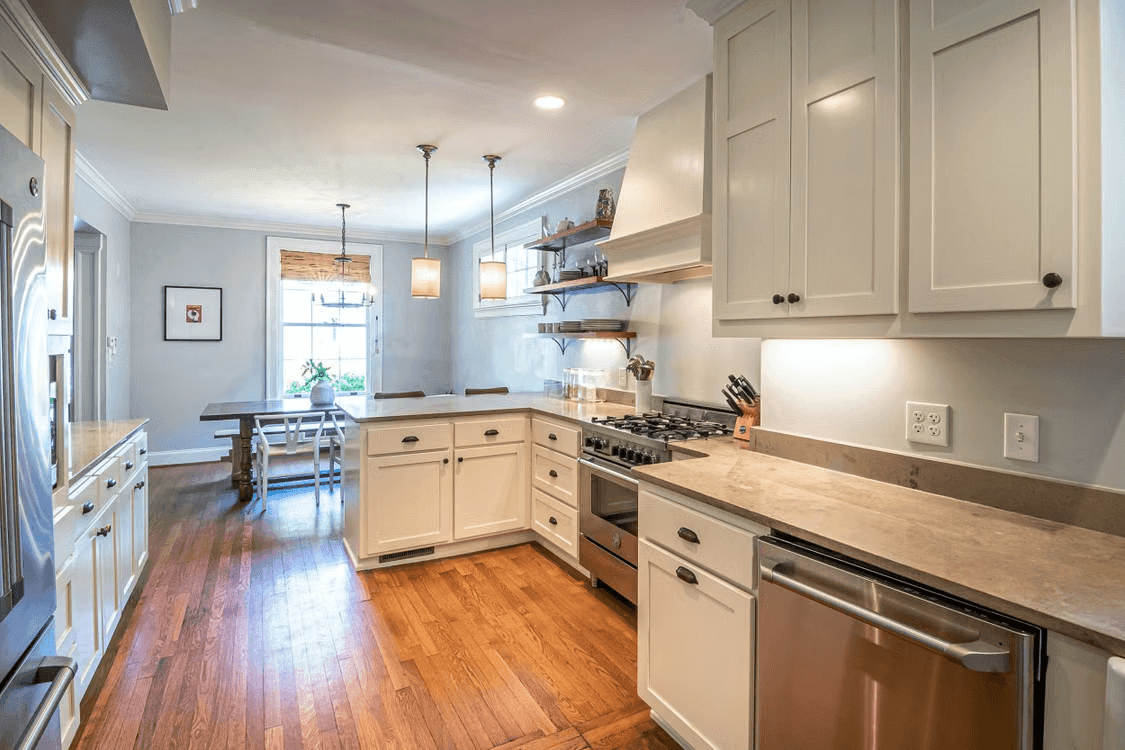
The traditional shaker style, which you can also find under the name of “classic shaker style”, is among the easiest versions to imagine as it’s been around the longest. Think a wide frame, square edges, round knobs, and a flat recessed centre panel, elements that make the cabinets easy to blend with almost any home. It’s giving off that heritage feel, sturdy and unpretentious, and makes the room feel lived-in, without showy additions that don’t serve a practical purpose.
This is the very definition of a shaker kitchen, and part of what made this trend survive through generations and still feel relevant. Keep in mind, the style traces back to the 18th century. It owes its existence to the Shakers, a religious group with roots in Manchester, whose members built their own furniture with quality materials and simple designs, furniture intended to be useful every day and hold up over time.
Back to what sets the traditional apart from the modern, because they’re the most popular in the shaker family, the differences come down to a few tweaks. The former you’ll recognise by its classic, chunkier proportions that give the units a warm and traditional character, something you can easily picture in a classic family home.
Some traditional doors add a thin beaded detail around the inside of the frame, a small touch that gives the cabinets a more handmade, old-world look. On the other hand, we have the sleek modern shaker that maintains the same five-piece idea, but simplifies the concept. It’s easy to recognise by its slimmer frames, minimalist hardware, a cleaner feel, and colours that can lean a little bolder, all things that make the kitchen feel fresh while keeping the shaker charm.
Modern shaker and contemporary shaker are often used interchangeably, so it pays to clear this up here. In general, the modern is tied to the mid-century movement, when designers turned to clean lines and a stronger focus on functionality, so everything got simpler.
Contemporary is used more loosely for what’s in style now, which can mean small tweaks from season to season. But in kitchen shopping, they mean pretty much the same thing, so pay more attention to the actual details on the door than the brochure.
Slim and luxury, other shaker styles worth considering
Next, we have the slim shaker, also known as the micro shaker, which takes the frame down to a thin strip and makes the whole kitchen feel lighter, a great choice for smaller rooms that could use a less crowded look.
There are also kitchens labelled as luxury shaker on the market, a name that’s not necessarily a separate style as such but one retailers give to their more premium sets. The fact that shaker units aren’t set in stone gives you more room to tailor the kitchen to your personal taste and your home’s overall style.
Materials are worth a look, too. Traditional shaker doors are solid wood, such as pine, maple, or cherry, painted or left natural. Many modern ranges use engineered boards with a painted or foil finish instead, which tends to cost less, so check what the door is actually made of before you compare prices.
Shaker Kitchen Colours, Handles and Finishing Touches
The style you choose is part of the practical side – the colour step is where you get to be truly creative. Here, you’ll want to choose a colour that’ll look chic and timeless years from now, at the same time complementing the rest of the hues in your kitchen.
Warm neutrals like putty or cashmere are taking over from the cool greys that used to dominate brochures a few years ago, while bolder shades of green and blue add the richness that makes the cabinetry the highlight of the room. But the colour is only the starting point, and with a well-stocked provider of shaker kitchen units, you’ll have plenty of options in terms of hues and finishes to find the exact look you’re after.
From there on, you can start layering in the hardware and the smaller details that fine-tune the final look, like the very pieces you use to open the doors. Round knobs work well in both modern and traditional kitchens, depending on their finish, and they should match the rest of the metallic accents around so everything ties together. Cup pulls are usually installed on the drawers and add a nice, traditional touch to the cabinetry.
Sleek, long bars work best for a modern setup, and if you want an even cleaner look, you can also opt for soft-touch push-to-open doors. Worktops follow a similar logic, with wood or natural stone as top choices for a traditional frame and a plain quartz or laminate looking sharp in a modern setup.
Storage is another finishing touch. A traditional peg rail keeps everyday pots, pans, and utensils within reach, while open shelving or glass-fronted cabinets break up solid runs of doors and give you somewhere to display glassware and china. In a bigger kitchen, a pantry or freestanding dresser fits the same spirit.
Which Kitchens Shaker Actually Works In
Shaker is one of the few styles that suits virtually any type of kitchen architecture and doesn’t care much about the size of the room. If your space leans narrow, this style’s plain lines can keep the setup calm and stop the space from feeling crowded, letting the light bounce freely and unblocked by heavy details.
In a large room, the frames add some character to what could otherwise be a long wall of flat doors. It’s a style that works if your home blends old and new aesthetics; think wooden floors alongside modern kitchen appliances.
Shaker units also work well around islands, particularly in open-plan kitchens. They anchor the layout with their clean lines and balanced proportions without visually burdening the space, and many people paint the island in a contrasting or deeper colour compared to the units to make it look more like a piece of furniture.
Get the style and colour right, and you can play with the handles and worktops over the years as your preferences change. Because the design relies on simple lines rather than trends, a shaker kitchen rarely feels dated. That’s the beauty of a shaker kitchen.