Creating a Vision Board to Support Sobriety Goals
This post contains affiliate links. Click here to read my affiliate policy.
Last Updated on November 3, 2025
Recovery from addiction is a journey that requires courage, clarity, and ongoing motivation. While support groups, therapy, and daily routines are all crucial, visual tools like vision boards can also play a powerful role They help us remember our “why,” stay grounded in our goals, and imagine a brighter, sober future.
A vision board is more than just a collage of inspiring pictures—it’s a visual representation of your hopes, dreams, and intentions. When created with purpose, it can serve as a daily reminder of what you’re working toward and a source of strength on difficult days.
What Is a Vision Board?
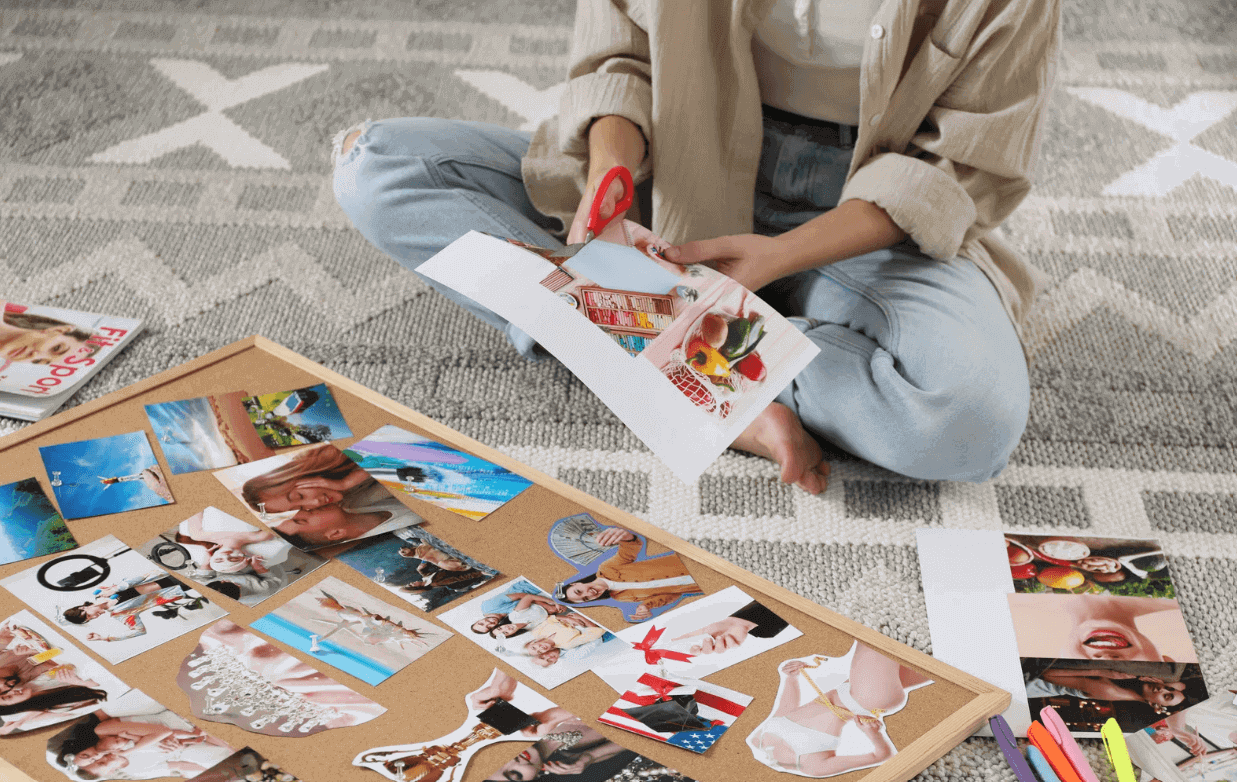
A vision board is a collection of images, words, and symbols that represent the life you want to create. It’s usually arranged on a poster board, notebook, or digital platform. You can focus your board on one specific area (like sobriety) or use it to visualize your overall well-being and healing journey.
The idea is rooted in visualization psychology—the concept that seeing your goals and dreams daily helps strengthen your commitment and motivation to achieve them.
📖 According to a study published in Behavior Modification, visualization techniques like mental imagery and vision boards have been shown to improve self-regulation and goal achievement, especially when paired with consistent action (Taylor et al., 1998).
Why Vision Boards Support Sobriety
Reinforces Positive Focus
In early recovery, it’s easy to dwell on what you’re giving up—people, habits, substances. A vision board helps shift that focus toward what you’re gaining: freedom, clarity, peace, and new possibilities.
Looking at your board each day can remind you of the life you’re building, not just the addiction you’re leaving behind.
Strengthens Motivation and Intentions
Recovery is not always linear. Some days are harder than others. A vision board acts as a motivational anchor, helping you reconnect with your “why” when you feel discouraged or tempted.
Whether it’s a photo of your kids, a peaceful forest, or a word like “freedom” or “renewal,” these visual cues can bring you back to your deeper intention.
Encourages Mindful Reflection
Creating a vision board isn’t just about cutting and pasting—it’s an opportunity to reflect on what truly matters to you. It invites you to think about:
– What kind of life do I want in sobriety?
– What brings me peace, purpose, or joy?
– What am I working toward, emotionally and spiritually?
This self-inquiry is a form of mindfulness that supports healing.
Builds Hope and Future Orientation
One of the hardest parts of addiction is the sense of hopelessness or feeling stuck. A vision board helps you imagine a future worth staying sober for. This act of hopeful planning is essential for long-term recovery.
Research published in Addiction Research & Theory highlights that future-focused thinking is a protective factor against relapse, especially when individuals can visualize meaningful, sober goals (Wills et al., 2001).
How to Create a Sobriety-Focused Vision Board
There’s no “right” way to make a vision board—your process is your own. But here’s a step-by-step guide to get you started:
Set Your Intention
Begin by getting clear on what you want your board to support. You might reflect on questions like:
– What does sobriety mean to me?
– What do I want to feel more of in my life?
– What areas of life am I excited to rebuild or rediscover?
Gather Materials
You’ll need:
– A board (poster, corkboard, or even a journal page)
– Magazines, newspapers, or printed images
– Scissors, glue, tape, and markers
– (Optional) Stickers, quotes, or photos
For digital boards, you can use apps like Canva, Pinterest, or Vision Board apps designed for goal tracking.
Choose Images and Words That Resonate
Pick visuals that represent your sobriety goals—not just in terms of abstinence, but the life you want to live. Some ideas:
– Words like “freedom,” “peace,” “strength,” or “growth”
– Pictures of nature, family, healthy activities, or travel
– Quotes that inspire you or remind you why you’re healing
– Symbols of progress (like a sunrise, butterfly, or open road)
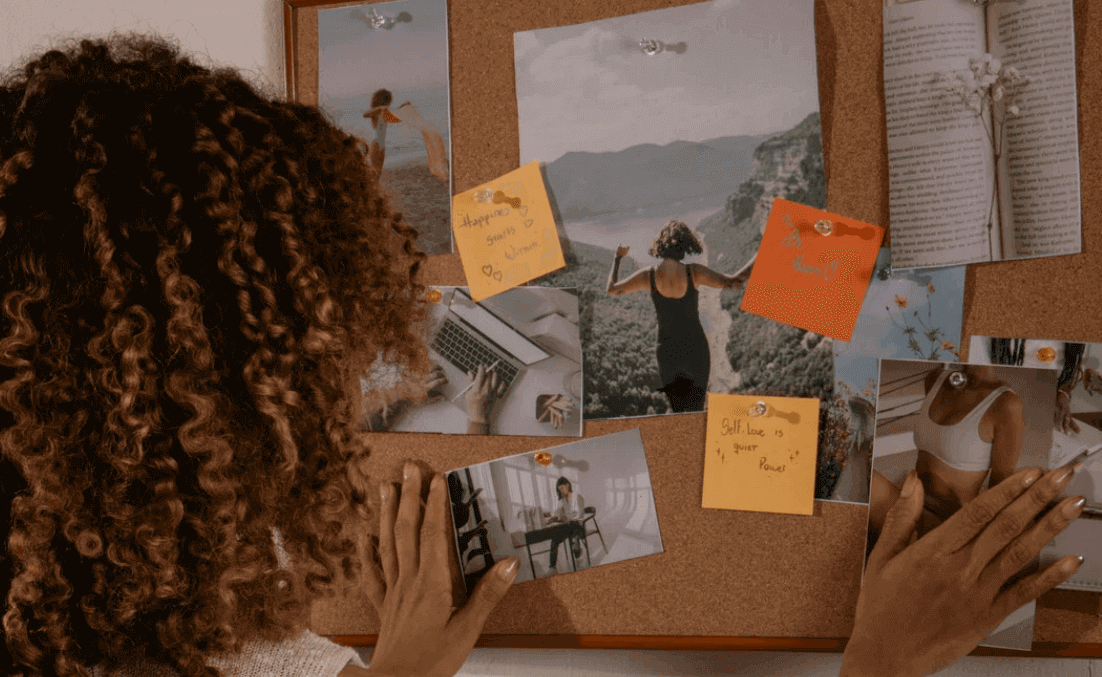
Arrange and Reflect
There’s no wrong way to arrange your board. Trust your intuition. Let your board feel like a reflection of your soul’s direction.
As you place each piece, pause to reflect on what it represents. Take a deep breath and let the image sink in.
Place It Where You’ll See It Daily
Hang your board somewhere you’ll notice it—in your bedroom, recovery journal, or workspace. Seeing it regularly reinforces your goals on a subconscious level.
Even a glance at your board can remind you, “I have a path. I have a purpose. I am choosing healing.”
Tips for Getting the Most Out of Your Vision Board
– Update it seasonally to reflect changes in your goals or emotional growth
– Pair it with affirmations or journaling for deeper reflection
– Use it in rituals, like setting intentions in the morning or checking in during cravings
– Share it with a trusted friend or sponsor if it feels right—it can strengthen your sense of accountability and connection
Final Thoughts
Your sobriety is not just about what you’re leaving behind—it’s about what you’re building. A vision board is a beautiful, empowering tool to help you see your healing journey with clarity, hope, and purpose.
It reminds you every day: you’re not just surviving. You’re creating. You’re growing. You’re becoming.
And that future you’re dreaming of? It starts with the pictures you choose, the intentions you set, and the courage you live—one day at a time.
References
– Taylor, S. E., Pham, L. B., Rivkin, I. D., & Armor, D. A. (1998). Harnessing the imagination: Mental simulation, self-regulation, and coping. American Psychologist, 53(4), 429–439.
– Wills, T. A., Sandy, J. M., & Yaeger, A. M. (2001). Time perspective and early-onset substance use: A model based on stress-coping theory. Addiction Research & Theory, 9(5), 393–414.