
What Are the Warning Signs of Mold in Your HVAC System?
This post contains affiliate links. Click here to read my affiliate policy.
Last Updated on July 2, 2026
Most homeowners never think about mold until they smell something off in a room that should be perfectly clean. By then, the problem may have spread through the ductwork for months without any visible sign on the walls or ceiling.
Once you know what to look for, the warning signs of mold in your HVAC system become easier to recognize. They follow a pattern. Here are five signals that mold has taken hold inside your system.
A Persistent Musty or Earthy Odor Throughout Your Home
A musty smell often catches your attention first, and it’s worth taking seriously. Many homeowners blame a damp basement or an old carpet, but here’s the thing: timing is everything. If the odor gets noticeably stronger every time the HVAC system turns on, the source sits almost certainly inside the ductwork or around the air handler itself. Mold releases volatile organic compounds as it grows; those compounds travel through every supply vent in your home the moment air starts moving. Rooms far from each other can smell identical, and that widespread pattern points to contamination in the shared distribution system rather than one localized spot.
The mold removal system by Quality Air Duct Cleaning handles cases exactly like this one, where the odor is present but visible growth isn’t obvious to the homeowner yet. The smell may fade slightly in winter or when humidity drops, but that doesn’t mean the colony is gone. Mold can go dormant in dry conditions and reactivate quickly once moisture returns. Will you notice the smell cycling on and off with the seasons? That pattern itself is a warning. Don’t dismiss a musty odor as harmless; treat it as an early diagnostic signal.
Visible Dark Spots or Discoloration Around Air Vents
Dark staining around vent covers and registers is one of the most direct visible warning signs of mold in your HVAC system. A thin ring of black, gray, or greenish residue around the edges of a supply vent often means mold spores are moving through the duct and depositing on surfaces near the opening. The wall or ceiling paint around the register may look dingy even after cleaning, because the discoloration comes back within a few weeks. Most homeowners mistake this for simple dust accumulation, but ordinary dust doesn’t return that quickly after a thorough wipe-down, and it doesn’t leave a greenish or dark gray tint.
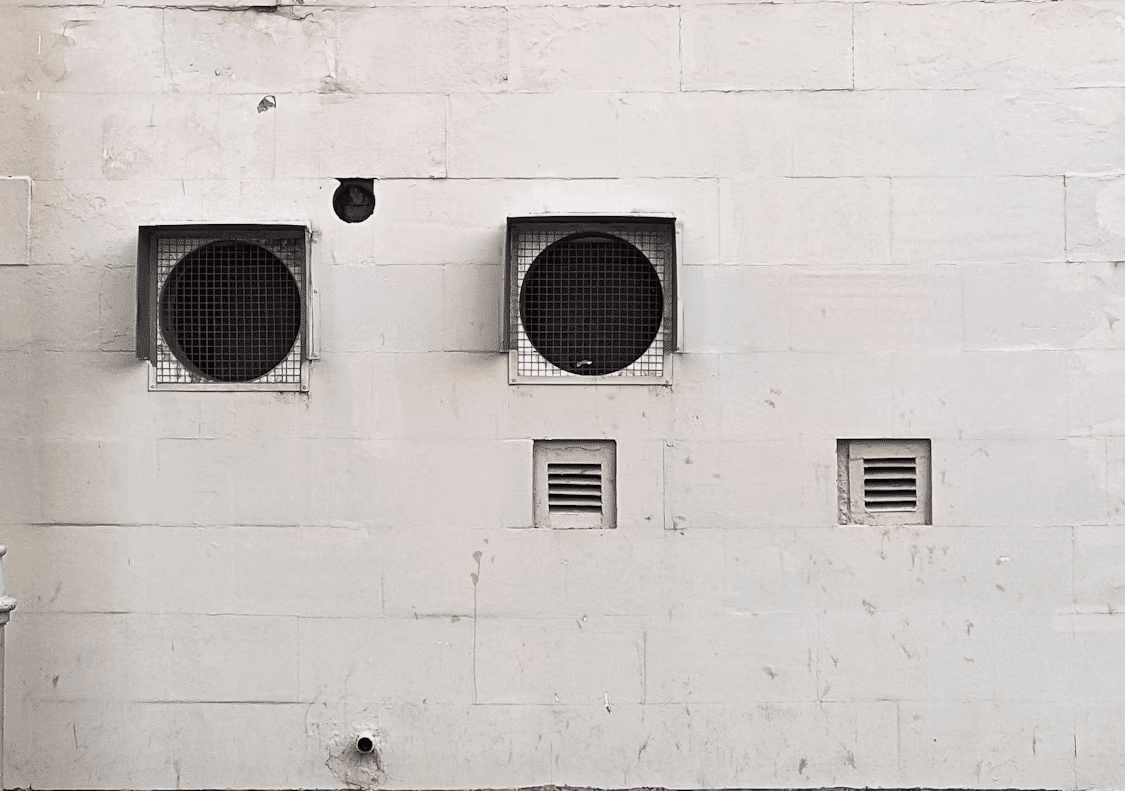
Check both supply vents and return air grilles, since both can show this kind of staining. Return ducts pull air in from living spaces and can accumulate biological material along their inner surfaces; the area directly around return grilles is especially telling for this reason. If you remove the vent cover and see dark streaking or a fuzzy texture on the inside of the duct collar, that’s confirmation, not a maybe. A full inspection of the duct interior is what comes next, not just a surface cleaning of the register itself.
Unexplained Allergy or Respiratory Symptoms Tied to HVAC Use
Your body can detect mold in the air supply before you see or smell anything obvious. Mold spores are microscopic; they trigger immune responses in sensitive individuals at concentrations too low to produce a visible colony or a detectable odor. Watch for whether allergy-like symptoms appear or worsen when the HVAC system is running. Common symptoms include:
- Sneezing or a runny nose that starts shortly after the system turns on
- Eye irritation or itchiness that improves when you’re outside or in a different building
- Throat dryness or a scratchy sensation that gets better on days when windows are open
- Coughing fits that occur mainly indoors, especially in rooms directly below supply vents
- Headaches that follow a pattern tied to indoor time rather than external allergen seasons
These symptoms are easy to attribute to seasonal allergies or a mild cold. But that explanation breaks down when the symptoms track with HVAC use rather than outdoor pollen counts. Does someone in your household have asthma or a compromised immune system? Their condition may worsen during particular months without a clear outdoor trigger. Check whether that timing corresponds with periods of high humidity and frequent HVAC cycling; that overlap is a meaningful clinical clue worth investigating.
Condensation, Water Stains, or Moisture Near HVAC Components
Moisture is what mold requires above all else, so any sign of excess moisture near your HVAC components should be treated as a pre-mold or active-mold situation until proven otherwise. Condensation on supply ducts, pooling water near the air handler, or rust stains on the drip pan all point to the same underlying problem: the system isn’t managing humidity correctly. In a Houston climate with consistently high outdoor humidity, the risk runs especially high. An HVAC system that sweats, drips, or leaves water stains on the ceiling directly below an attic-mounted air handler is giving you an advance warning. Biological growth is either already present or imminent.
Check the drip pan under the air handler on a regular basis. A clean drip pan should be mostly dry between service visits. Standing water in the pan, a slimy film, or discoloration inside the pan all indicate that drainage is compromised; the environment inside your air handler is actively hospitable to mold. Clogged condensate drain lines cause this problem frequently, and clearing the line is straightforward; it prevents a much larger remediation job down the road. Don’t wait for water damage on a ceiling or wall to prompt action; the drip pan is an accessible early-warning indicator you can check yourself.
Frequent HVAC Performance Issues Without a Clear Mechanical Cause
Mold growth inside an HVAC system can affect airflow and system performance in ways that don’t announce themselves obviously. A contaminated evaporator coil reduces heat-transfer performance and forces the system to run longer to reach the set temperature. So if your energy bills have climbed without a change in usage patterns, or if some rooms feel noticeably warmer or cooler than others despite the same thermostat setting, restricted airflow through contaminated ducts or components could be responsible. Service technicians sometimes flag this as a refrigerant issue or a failing blower motor, but if those components check out fine, biological obstruction inside the system becomes the next logical suspect.
A system that short-cycles frequently or struggles to maintain consistent humidity levels may also have mold-related restrictions in the duct network. Heavy mold colonies on coil surfaces or inside ducts narrow the effective airflow pathway; this changes the pressure balance across the system. The result? Uneven temperature distribution, longer run times, and higher operating costs. None of these symptoms point exclusively to mold on their own, but when they appear alongside any of the earlier warning signs, odor, staining, respiratory issues, the combination makes a thorough mold inspection the most logical immediate action.
Conclusion
The warning signs of mold in your HVAC system range from obvious discoloration at the vents to subtler clues like rising energy bills and seasonal health symptoms. No single sign is definitive on its own; several appearing together tell a clear story. Musty odors, dark staining, moisture problems, unexplained respiratory symptoms, and unexplained performance drops are all signals that deserve a professional inspection rather than a wait-and-see approach. The sooner you identify the problem, the smaller and less costly the remediation job tends to be.