
9 Small Lifestyle Changes That Can Help You Spend Less Time on Your Phone
This post contains affiliate links. Click here to read my affiliate policy.
Last Updated on October 4, 2026
Phones have taken over a surprising number of everyday jobs. They are our alarm clocks, grocery lists, recipe boxes, calendars, cameras, maps, and, of course, phones.
That’s convenient until checking one small thing turns into ten minutes of scrolling. You pick up your phone to see the time, notice a message, answer it, and somehow end up checking three other apps.
Cutting back doesn’t require a weekend-long digital detox. It can be as simple as finding a few moments when your phone doesn’t need to be involved.
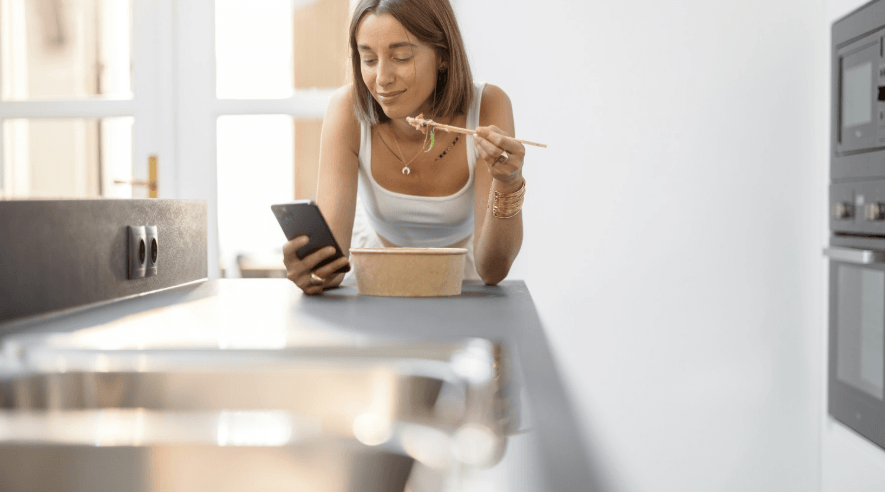
1. Make Meals a Phone-Free Time
Start with the dinner table.
Leave your phone on the kitchen counter or in another room instead of setting it beside your plate. With the screen out of sight, there’s less temptation to check every buzz or notification.
This doesn’t have to be limited to family dinner. Breakfast and that quiet afternoon cup of coffee count too. Pick one meal or snack each day and enjoy it without a screen nearby.
2. Check the Time Without Checking Your Phone
Picking up your phone just to check the time can easily lead to checking something else. A message is waiting, an email catches your eye, and a quick glance at the clock turns into a few minutes on your phone.
Try using the clocks you already have around the house instead. The oven clock works when you’re in the kitchen, and a wall clock is handy in rooms where you spend a lot of time. When you’re out, wearing a traditional watch makes checking the time just as easy.
That watch might be one you’ve had forever or a Swiss made Tissot Watch someone gave you for a birthday, graduation, or other special occasion. Whatever is already sitting in your jewelry box can give you one less reason to pull out your phone.
Some quartz watches have the familiar tick-tick-tick of a wall clock, while mechanical watches can be much quieter. Tissot watches, for example, come in both types: mechanical ones like their successful PRC 80 or quartz. But if the goal is simply to check the time without reaching for your phone, either one works. Just glance at your wrist and carry on. To each their own!
3. Bring Back the Alarm Clock
Using your phone as an alarm usually means sleeping with it close enough to reach. That’s also a convenient setup for late-night scrolling.
Consider going back to a basic alarm clock and charging your phone on the other side of the room. Better yet, leave it outside the bedroom if that works for your household.
There may be a sleep benefit as well. The Sleep Foundation explains how electronic devices can affect sleep, including the effects of screen light and stimulating content before bedtime.
Moving the phone also changes how the morning starts. Instead of waking up to email and notifications, there’s time to open the curtains, get dressed, make breakfast, or have a cup of coffee first.
Some of our readers report that not touching their phone in the morning improves mental peace and even uninterrupted time with their partners. Who would have thought that a good old alarm clock could do this?

4. Put Your Grocery List on Paper
A scrap of paper isn’t nearly as exciting as a smartphone. That’s exactly what makes it useful.
Keep a notepad in the kitchen and add things as you run out of them. Used the last of the olive oil? Write it down. Only one egg left? Add eggs to the list.
Before shopping, group everything into produce, meat, dairy, pantry items, and household supplies. You’ll spend less time wandering around the store and won’t need to unlock your phone in every aisle.
Planning several meals at once can make the process even easier. These healthy tips for preparing meals in advance are a useful place to start before a busy week.
5. Don’t Let Your Phone Be the First Thing You See
Give yourself 15 or 30 minutes in the morning before checking what’s happening online.
There are usually plenty of other things waiting anyway. Make breakfast, pack lunches, feed the pets, water the plants, or sit down with your coffee while it’s still hot.
It doesn’t need to become an elaborate 5 a.m. ritual. A short stretch of quiet time is enough. For more ideas, this guide to creating a morning routine looks at ways to make mornings work better for everyday life.
After a while, reaching for your phone immediately may stop feeling quite so automatic.
6. Be Picky About Notifications
Some alerts matter. Plenty don’t.
A notification from a family member is different from a shopping app announcing a sale or a game asking you to come back and play.
Those little interruptions can affect attention even when you don’t pick up the phone. In a study indexed by the National Library of Medicine’s PubMed database, researchers found that cell phone notifications disrupted performance on an attention-demanding task even when participants didn’t interact with their phones.
Spend a few minutes going through your notification settings. Keep the alerts that are useful and silence the rest. The apps will still be there when you decide to open them.
7. Give Your Phone a Home
Keys often have a bowl or hook by the door. Shoes have a closet. Give your phone a regular spot too.
A shelf, charging station, or basket on the kitchen counter works well. When you’re cooking dinner, reading, gardening, or playing with the kids, leave it there.
The small amount of distance matters. Reaching for a phone is much less automatic when it isn’t already in your hand or pocket.
8. Take a Walk and Leave the Screen in Your Pocket
You don’t have to leave your phone at home to take a break from it.
Bring it along if you want it for directions, calls, or emergencies, but keep it in your pocket or bag. Look around while you walk instead.
Notice what’s growing in the neighborhood gardens. See how the trees are changing with the season. If you’re walking with your kids or a friend, talk to them instead of checking what’s happening somewhere else.
And there’s no need to photograph, count, or post every walk. Sometimes a ten-minute walk can just be a ten-minute walk.

9. Let One Thing Be Just One Thing
Think about the last time you watched television without also looking at your phone.
The same thing happens while cooking, drinking coffee, waiting for water to boil, or sitting outside. Every quiet moment becomes an opportunity to check something.
Pick one everyday activity and leave the phone out of it.
While making dinner, pay attention to chopping the vegetables, stirring the pot, and tasting the food. Sit outside with your morning coffee and leave the phone in the kitchen. When someone is telling you about their day, keep the screen out of your hand.
Not every empty minute needs to be filled.
Make Your Phone a Tool Again
Smartphones make life easier, and that’s why they became part of so many daily routines in the first place. But convenience doesn’t mean every task needs a screen.
Start with whichever change sounds easiest. Maybe that’s a paper grocery list. Maybe it’s moving the phone away from the bed or leaving it on the counter during dinner.
Small boundaries are easier to stick with than dramatic rules. And when the phone isn’t filling every spare moment, there’s a little more room for the ordinary things already happening around you.