How Much Does Tattoo Removal Really Hurt
This post contains affiliate links. Click here to read my affiliate policy.
Last Updated on July 8, 2026
Anyone booking a laser tattoo removal session usually has one question sitting underneath all the others: how bad is this going to hurt? The honest answer is that it depends on where the tattoo sits, how big it is, and how your body responds to laser energy — but there’s enough consistent feedback from patients and practitioners to give you a real picture of what to expect.
What the Sensation Actually Feels Like
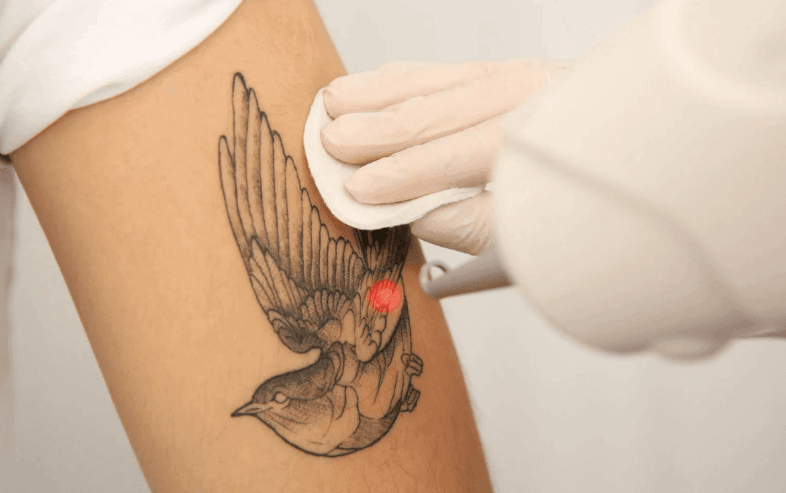
Most people describe the feeling as similar to being snapped repeatedly with a rubber band, mixed with a hot, prickling sensation as the laser pulses hit the skin. Some compare it to grease splattering off a hot pan and landing on bare skin. It’s sharp and immediate rather than a dull ache, and it stops the moment the laser stops firing.
The pain comes in short bursts rather than a constant sensation, since the laser is delivering rapid pulses rather than a continuous beam. A small tattoo might only take 30 to 90 seconds of actual laser contact, meaning the intense part of the discomfort is over quickly even if the anxiety leading up to it feels longer.
Location on the Body Changes Everything
Where the tattoo sits matters as much as its size. Areas with thin skin, less fat padding, and more nerve endings close to the surface tend to hurt more. Ribs, ankles, feet, hands, and the spine are consistently ranked among the most sensitive spots for removal.
By contrast, areas with more muscle and fat underneath — like the outer thighs, calves, or upper arms — tend to be more tolerable. If you have tattoos in multiple locations, don’t be surprised if one session feels far more manageable than another simply because of placement.
Ink Color and Density Play a Role Too
Darker inks, particularly black and dark blue, absorb laser energy more efficiently, which means they often respond faster to treatment but can also produce a more intense sensation during the pulse. Lighter colors like yellow, white, and pastel shades are trickier to treat and sometimes require different laser wavelengths altogether, which can change the sensation.
Densely packed ink, like solid black fill or heavy shading, tends to hurt more than fine linework because there’s simply more pigment being broken down in the same area. A detailed tattoo with lots of shading will generally feel more intense than a simple outline of the same size.
How Session Number Affects Discomfort
Interestingly, discomfort doesn’t necessarily increase over the course of treatment. Many patients report that the first one or two sessions feel the most intense, especially with darker ink that’s still dense in the skin.
As sessions progress and ink fragments break down, there’s less pigment left to absorb the laser energy, which can mean slightly reduced sensation in later appointments. Skin also tends to become a bit more accustomed to the sensation, even though it never becomes what most people would call comfortable.
What Clinics Do to Manage the Pain
Reputable clinics don’t expect you to grit your teeth through it. Topical numbing creams applied 30 to 45 minutes before treatment are standard practice, and many clinics also use cooling devices — cold air machines or ice packs — during the procedure itself to reduce the sensation in real time.
Some providers use a Zimmer chiller, which blows extremely cold air onto the skin during the laser pulses, numbing the area on contact. This combination of topical numbing and active cooling makes a significant difference for most patients, turning an intense experience into something far more manageable.
Working with trusted tattoo removal specialists in Camberwell, VIC means you’re likely to get this kind of thoughtful pain management as standard, rather than an afterthought. Clinics that specialize in removal tend to have refined their numbing and cooling protocols specifically because they understand how much comfort affects whether people finish their treatment plan.
Comparing It to Getting the Tattoo in the First Place
Most people who’ve had both experiences say removal hurts more than the original tattoo, at least in short bursts. Getting tattooed involves a more consistent, lower-level discomfort spread across a longer session, while removal delivers sharper, more concentrated bursts of sensation packed into a much shorter window.
That said, the total time spent in discomfort is usually far less with removal. A tattoo that took four hours to apply might only need 60 seconds of actual laser time per session, even though it takes multiple sessions spread over months to fully clear.
What You Can Do to Make It More Bearable
Taking an over-the-counter pain reliever before your appointment, avoiding caffeine and alcohol beforehand, and staying hydrated can all take the edge off. Applying numbing cream as directed and arriving early enough for it to fully take effect makes a real difference too.
Breathing steadily during the pulses, rather than tensing up, also helps — tense muscles tend to amplify the sensation rather than protect against it. Bringing headphones for music or a podcast gives your brain something else to focus on during the short bursts of treatment.
The pain is real, but it’s brief, predictable, and manageable with the right preparation. Talk to your provider about numbing options before your first session rather than after, since starting with a solid pain management plan makes every appointment after that one considerably easier to get through.