What Actually Makes Outdoor Furniture Durable (And What Just Looks Like It Will Be)
This post contains affiliate links. Click here to read my affiliate policy.
Last Updated on May 26, 2026
Outdoor furniture fails in predictable ways. The cushion fabric fades in the first summer of direct sun. The frame develops rust at the joints by year two. The wicker begins to crack and pull away from its weave after a few hard winters. None of these failures are surprises to anyone who understands what the material was and what the outdoor environment actually does to it.
The gap between furniture that lasts and furniture that doesn’t is almost entirely a material decision made before anything leaves the showroom floor. Understanding what those materials are and what distinguishes genuine durability from the appearance of it is the most useful thing a buyer can know before investing in an outdoor space.
Why Outdoor Furniture Fails Faster Than It Should
The outdoor environment is genuinely hostile to most materials. UV radiation breaks down synthetic fibers and surface coatings. Moisture works its way into frames through joints and welds. Temperature cycling the expansion and contraction of materials across seasons stresses connections and finishes in ways that accumulate invisibly until something gives. And unlike indoor furniture, which is protected from all of these forces, outdoor pieces face them daily.
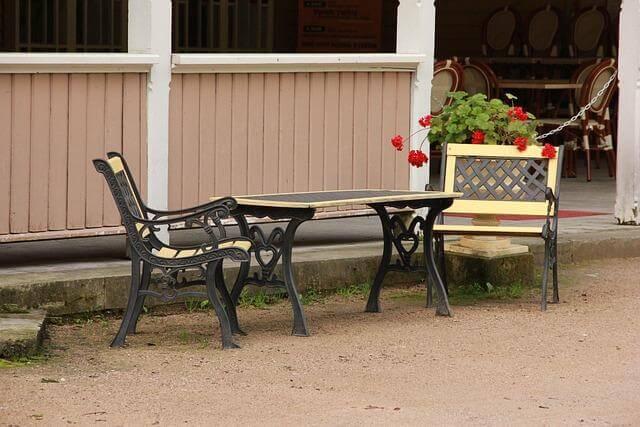
Material choice is the foundational durability decision, the right combination of weather-resistant materials, like powder-coated aluminum, teak, or HDPE wicker, can withstand the most demanding outdoor conditions with the least maintenance. The wrong choice is a material that looks robust in a showroom but wasn’t engineered for sustained outdoor exposure will begin showing its limitations within a season or two, regardless of how carefully it’s maintained.
The Materials Worth Understanding
Not all outdoor furniture categories are equal in what they can withstand. Here’s what the strongest options offer and where each one has limits.
Teak
Teak is the benchmark hardwood for outdoor furniture, and its reputation is well-earned. The natural oils in teak act as a built-in preservative, making it one of the longest-lasting woods in the world for outdoor use resistant to rot, insects, and moisture in ways that other woods achieve only through chemical treatment. Teak’s inherent moisture resistance prevents warping, cracking, and splitting even under heavy rain and intense sunlight, which puts it in a different category from softwoods like cedar or pine that require regular resealing to maintain those properties.
The tradeoff is maintenance and cost. Teak develops a natural silver-gray patina as it ages outdoors — handsome in its own right, but not the warm golden tone the wood starts with. Preserving the original color requires occasional oiling, typically once a season. For buyers who want the patina to develop naturally, teak is among the lowest-maintenance wood options available. For those who want to preserve the original tone, it requires more consistent upkeep than the alternatives.
Powder-Coated Aluminum
Aluminum is lightweight, rust-resistant, and requires minimal maintenance, just occasional cleaning with soap and water making it one of the most practical choices for outdoor furniture across a wide range of climates. Powder coating adds a durable finish that resists chipping, fading, and corrosion, extending the life of the frame significantly compared to painted or untreated metal.
The practical advantage of aluminum over heavier metals like wrought iron is meaningful: it’s easy to rearrange, store when needed, and doesn’t place the same structural demands on decking or patio surfaces.When longevity with minimal upkeep is the priority, powder-coated aluminum consistently performs at the top of the outdoor furniture materials category.
HDPE (High-Density Polyethylene) Wicker
Synthetic wicker made from HDPE is engineered specifically for outdoor durability in a way that natural wicker is not. HDPE wicker is UV-stabilized and fade-proof, won’t crack or peel under constant sun exposure, and can last 15 years or more with relatively minimal care. It offers the visual warmth of a woven texture without the moisture sensitivity of natural rattan or reed, which require protection from prolonged humidity to prevent deformation and mildew.
The key distinction when buying wicker is confirming its HDPE or all-weather synthetic, not natural wicker, which typically lasts 5–10 years even with careful upkeep and degrades significantly faster without it. The two materials look nearly identical in a product photograph and are dramatically different in performance.
The Frame Is Where Most Outdoor Furniture Fails
Material grade matters everywhere in a piece of outdoor furniture, but the frame is where failures are most consequential. A cushion can be replaced. A frame that has rusted through its welds or warped from moisture infiltration takes the whole piece with it.
Durability in the frame comes as much from the unseen construction details as from the material itself stable joinery, rust-resistant finishes at the connections, and welding quality that prevents moisture from finding its way into the metal structure. A teak top on a poorly constructed aluminum base, or a powder-coated exterior hiding thin-gauge metal, will underperform what the material grade suggests. The frame should feel substantial in hand, with connections that don’t flex or shift when the piece is lifted.
Cushions: The Part That Fails First Without the Right Fabric
Even the most durable frame will be let down by cushions that aren’t built for outdoor exposure. Solution-dyed acrylic fabrics,Sunbrella being the most widely known, are specifically engineered for outdoor use, with UV resistance and moisture management built into the fiber rather than applied as a coating that will eventually wear off.
The distinction matters because standard upholstery fabric used outdoors will fade, grow mildew, and begin to deteriorate within a season. Performance outdoor fabrics resist fading, repel moisture, and can be cleaned with a mild solution without damaging the material, the properties that make a cushion worth keeping on the furniture rather than bringing inside after every rain.
Matching Materials to Your Specific Environment
Choosing durable outdoor furniture that performs well for years starts with understanding what your local climate actually demands. Coastal environments introduce salt air, which accelerates corrosion in metals that aren’t properly treated. High-UV climates put greater demands on synthetic materials and surface coatings. Regions with hard winters require pieces that can be stored or covered without suffering from the cycle of freeze and thaw.
The consistent guidance across environments is to prioritize material quality over price per piece. Investing in furniture built from genuinely weather-resistant materials costs more upfront but avoids the replacement cycle that makes cheaper alternatives more expensive over time. A teak dining set or powder-coated aluminum sectional chosen well and maintained minimally can anchor an outdoor space for a decade or more. A lower-grade alternative that needs replacing every few years doesn’t save money, it just defers the cost while delivering a worse result in the meantime.
Outdoor furniture that truly lasts is the product of specific material decisions made intentionally, with a clear understanding of what the outdoor environment demands and what each material was actually built to provide.