How to Build Healthy Eating Habits in Children
This post contains affiliate links. Click here to read my affiliate policy.
Last Updated on June 21, 2026
Parents who set out to feed their kids well usually start with food choices. The vegetables that make it onto the plate, the snacks that get stocked, the meals planned for the week. The choices matter. What often matters more, though, is the rhythm and atmosphere around the food. Children pick up on the cues that surround eating as much as on the food itself.
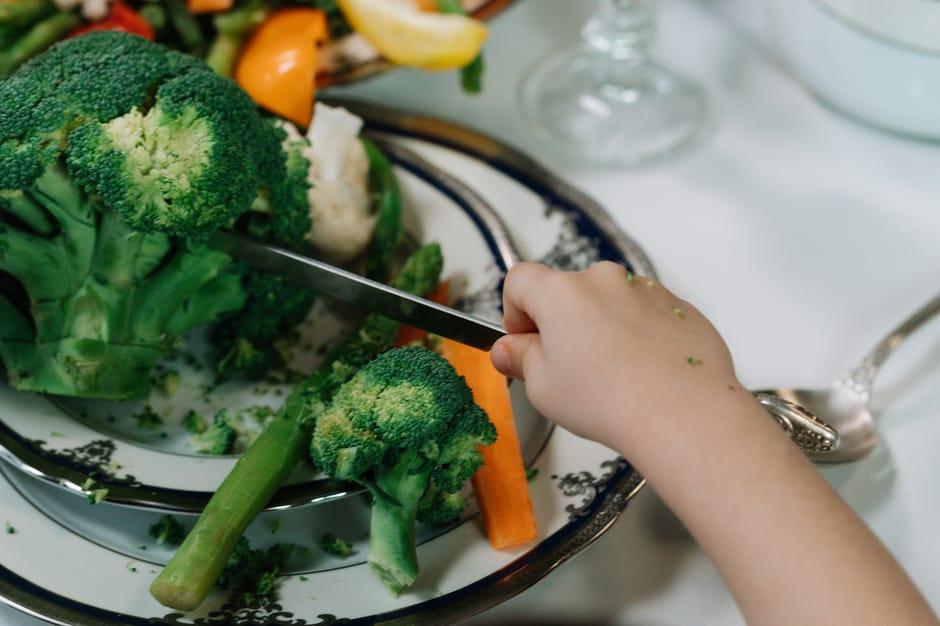
Photo by cottonbro studio on Pexels
Alt text: A child enjoying a healthy meal with vegetables at the family table
Building habits that hold takes a framework as much as a recipe library. Families in transition or with specific nutritional goals can visit JM Nutrition for the personalized guidance that complements the at-home habit work. The framework below covers the practical patterns parents can build into the household to grow healthy eating habits in children that hold over time.
Why Do Eating Habits Take Shape Early?
Eating habits take shape early because children learn from the household environment before they learn from explicit instruction. The way food appears on the table, the way the family eats together, the way parents respond to refusals or messiness all teach the child something. The lessons compound across years.
Three structural reasons explain the early window. First, children’s taste preferences calibrate during the first several years of life. Exposure to a wide variety of flavors, textures, and colors expands the palette the child will accept later.
Second, the household’s eating rhythm becomes the child’s baseline. Meals at the table, snacks at predictable times, and water as the default beverage all set patterns that hold. The US government’s nutrition.gov basic nutrition resource covers the framework parents draw from at this stage.
Third, the parent’s relationship with food becomes the child’s reference. A parent who eats vegetables with visible enjoyment teaches differently than one who eats them as a chore.
What Six Habits Build Healthy Eating in Children?
Six daily habits reliably build the foundation for healthy eating in children.
- Family meal anchor. At least one shared meal a day, eaten at the table, sets the household rhythm.
- Predictable structure. Meal and snack times follow a rough schedule rather than appearing whenever requested.
- Vegetable presence. Vegetables appear on every plate, even in small portions, building familiarity without pressure.
- Water as default. Water sits at the table by default, with juice or other beverages as occasional rather than routine.
- Cooking participation. Kids help with age-appropriate kitchen tasks, building familiarity with food.
- No-pressure plate. Children get exposure without coercion to clear the plate, which preserves a positive relationship with food.
A household running 4 or 5 of these habits usually sees the food preferences widen across months. The American Academy of Pediatrics’ healthy children nutrition resources cover the pediatric-side framework that informs the household habits.
How Should Parents Build the Eating-Habit Framework?
Five practical patterns shape an eating-habit framework that holds across childhood.
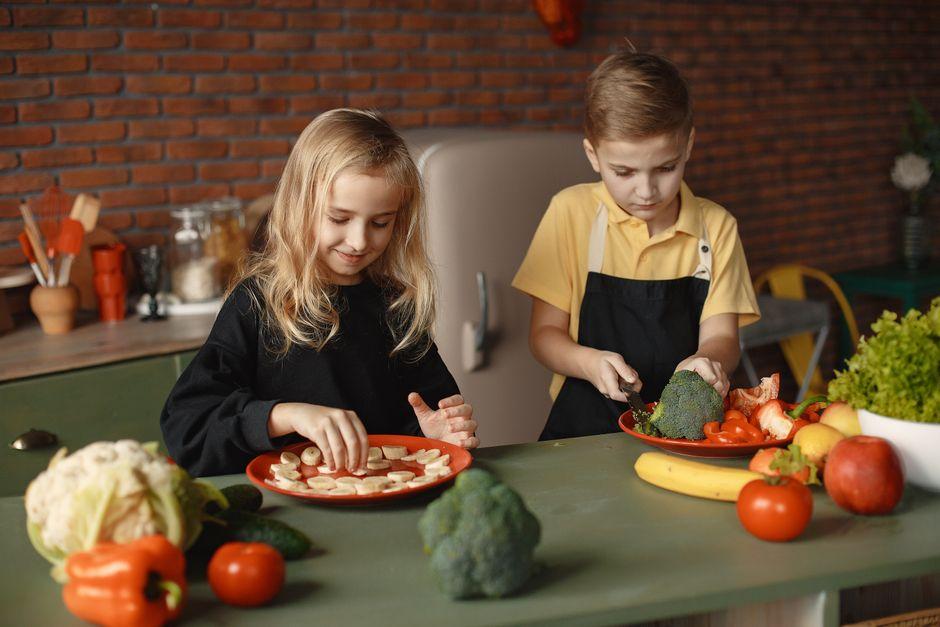
Photo by Gustavo Fring on Pexels
Alt text: A family cooking together with kids helping prepare fresh ingredients
The first is the rhythm anchor. Meals and snacks happen at roughly the same times each day, with water as the default between them. Predictability calms the child’s hunger signals.
The second is the variety pattern. The family rotates through a wide variety of meals across the week. Coverage of a low-carb pizza crust recipe reinforces how a familiar comfort food can be reworked to fit a family’s wider nutrition picture without losing the kid-friendly appeal.
The third is the involvement loop. Kids help with cooking tasks that fit their age. Washing vegetables, stirring, setting the table, and reading recipes all build the connection between the food and the meal.
The fourth is the parent-modeling habit. Parents eat the same foods they want their kids to eat. Coverage of gluten-free sourdough cinnamon buns reinforces how household dietary frameworks can produce family-friendly versions of beloved treats without leaving anyone out.
The fifth is the curiosity invitation. Parents talk about food at the table without pressure. “Try a small piece and tell me what you think” works better than “you have to finish”.
What Are the Common Habit-Building Mistakes?
A habit mistake is a household pattern that produces short-term compliance at the cost of the child’s long-term food relationship.
The first is the clean-plate insistence. Forcing a child to finish disconnects them from internal hunger and fullness cues and usually backfires across years.
The second is the dessert-as-reward trap. Using sweet food as the reward for eating vegetables teaches the child that vegetables are the cost and sweets are the prize.
The third is the snack-on-demand pattern. Snacks appearing whenever requested undermines the structured meals and snacks that build appetite at the right times.
The fourth is the limited-variety default. Serving the same six meals on rotation usually narrows the child’s palette rather than building it.
The fifth is the no-modeling habit. Parents who do not eat vegetables themselves rarely convince their kids to eat them either. Children read what the parents actually do, not what they say.
A Quick Healthy-Eating Habit Reality Check
- Confirm at least one family meal happens at the table each day
- Build a predictable meal and snack schedule
- Include vegetables on every plate without pressure to clear them
- Default to water between meals
- Involve kids in age-appropriate cooking tasks
The Honest Bottom Line for Building Healthy Eating in Children
Healthy eating in children grows from the household environment more than from any single nutritional rule. Rhythm, variety, involvement, modeling, and a no-pressure plate combine into the framework that holds.
The work is small day by day. The compounding effect across childhood produces children who relate to food with curiosity and confidence rather than anxiety or rebellion.
Frequently Asked Questions
At What Age Should Healthy Eating Habits Be Introduced?
Healthy eating habits start from the first solid foods. The framework around the table matters from the moment the child joins the family meal, well before the child can articulate food preferences.
How Many Times Should I Offer a New Food Before Giving Up?
Most children need 8 to 15 exposures to a new food before accepting it. Persistence without pressure usually opens the food window that early rejections can make feel closed.
Are Picky Eaters a Phase or a Habit?
Picky eating is often a developmental phase that resolves with the right household framework. Pressure tends to extend the phase; calm exposure and family modeling tend to shorten it.
Should I Limit Snacks for My Child?
Predictable snack times rather than on-demand snacks usually serve children better. Two structured snacks alongside three meals fits most school-age children comfortably.