
How Pediatric Physical Therapy Helps Kids Move With Greater Ease
This post contains affiliate links. Click here to read my affiliate policy.
Last Updated on October 29, 2026
Children build movement skills through daily practice, play, and exploration. When balance, strength, coordination, or posture creates difficulty, pediatric physical therapy provides focused support. A therapist in Wheaton South observes how a child moves, identifies barriers, and chooses activities that match their current abilities. Treatment can improve participation in play, routines, and community activities while supporting physical confidence. Families in Wheaton can learn how therapy works and what progress may look like in this practical guide.
A local evaluation starts with the child’s daily function rather than a diagnosis alone. The therapist reviews walking, stair use, transitions, play positions, and the family’s concerns. For families seeking a physical therapy clinic in Wheaton South, this assessment connects therapy goals to routines that matter at home, preschool, and in the community.
Why Movement Skills Matter
Movement skills affect how children explore, communicate, and participate. A child who avoids climbing, tires during walks, or struggles to rise from the floor may miss practice that builds confidence. Physical therapy addresses the movement pattern behind that difficulty, then breaks tasks into manageable steps. Progress is measured through functional changes, such as longer standing, steadier walking, safer transfers, or active playground participation.
Early physical therapy often focuses on gross-motor foundations. These include head and trunk control, rolling, crawling, standing, walking, running, and jumping. Treatment also addresses balance reactions, joint mobility, muscle strength, and coordination when those areas limit a child’s function. A pediatric therapist adjusts the challenge through positioning, repetition, games, and equipment so the child practices a useful skill without doing an activity that exceeds their current capacity.
What Pediatric Physical Therapy Sessions Can Include
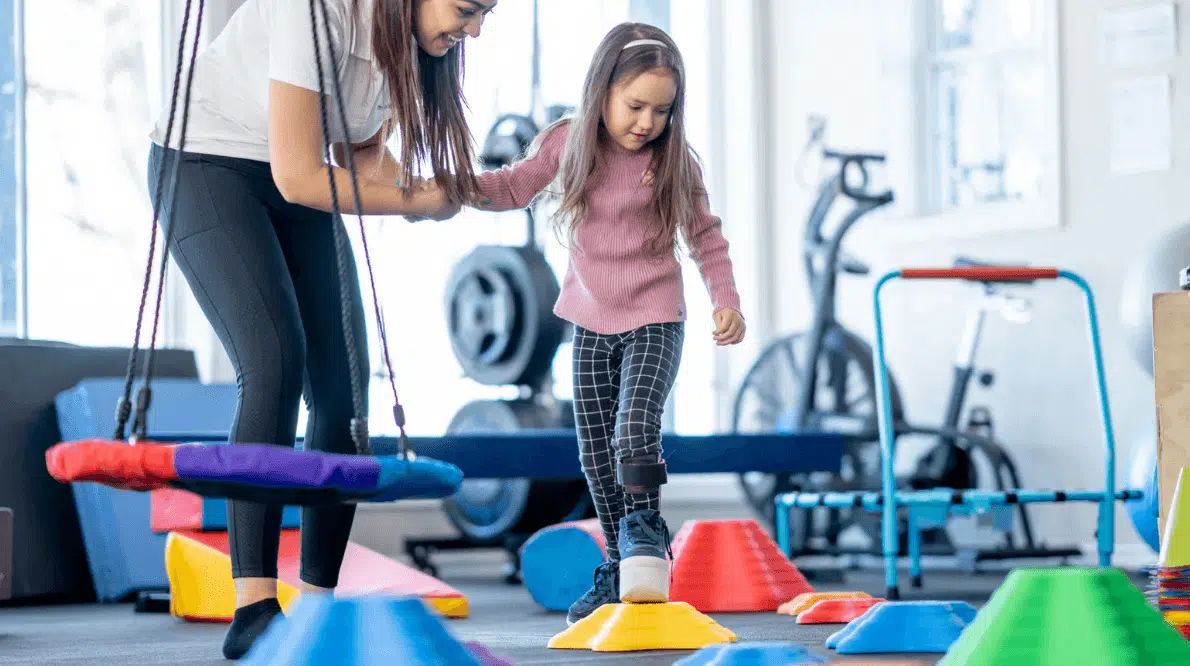
Sessions use play because play gives children repeated chances to move with purpose. A therapist might place toys at different heights, guide a child through stepping practice, or use a ball to work on balance and timing. The activity changes as control improves. Caregivers receive explanations about the goal, the movement to practice, and the signs that indicate a task needs adjustment.
Some children need help with endurance or body awareness during everyday tasks. Others need support after an injury, while some show delays in expected motor skills. A physical therapy evaluation considers strength, range of motion, balance, coordination, gait, and functional participation. The therapist then selects priorities that fit the child’s age, health history, interests, and routines.
Pediatric physical therapy supports children with a wide range of needs. Some families arrive after a diagnosis such as cerebral palsy, Down syndrome, or muscular dystrophy, some after an injury, and others because a child is missing expected motor milestones without a clear cause. The therapist’s plan follows what the child can do now, not the label alone.
How Progress Appears In Daily Routines
Progress does not look identical for every child. One child might first tolerate a supported standing position, while another might walk farther before resting. Therapists record changes in movement quality, task time, assistance level, and participation. These details help families distinguish a temporary performance from a repeatable skill over several visits. A useful goal also names the setting, such as standing during dressing or climbing playground steps, because context shows whether a new ability carries into daily life.
Caregiver involvement makes practice more consistent between appointments. Short activities can fit into dressing, floor play, bath time, walks, or trips to the park. A therapist can show caregivers how to position a child, provide safe support, and recognize fatigue. This guidance keeps home practice focused on the functional goal addressed during treatment.
Signs Your Child May Benefit From a Physical Therapy Evaluation
Parents can request an evaluation when a child struggles with movement during ordinary routines. Useful observations include frequent falls, difficulty using stairs, persistent toe walking, trouble rising from the floor, or avoidance of active play. A concern does not need to be severe before a family seeks guidance. Early discussion gives the therapist time to assess function and explain whether physical therapy fits the child’s needs.
Evaluation results should translate into clear goals. For example, a plan might target independent floor-to-stand transitions, longer periods of walking, improved stair safety, or better balance during play. Progress tracking helps families see which skills are changing and which tasks still require support. If another service is appropriate, the therapist can explain the next step and coordinate information with the care team.
Conclusion
Children move with greater ease when therapy targets practical skills and gives them repeated, meaningful practice. A pediatric physical therapy evaluation can clarify why movement feels difficult, which goals deserve attention first, and how caregivers can support practice at home. Families should record a few everyday concerns, such as falls, stair difficulty, or limited endurance, then share those observations with a qualified pediatric therapist to create a focused starting point for safer movement, active participation, and growing independence.